Do AI smart glasses help people learn at a rocket exhibit?
Why I did this
I've spent hundreds of hours standing next to my rocket exhibits. Most people read the first line of the poster, take a photo, and move on. I wanted to know whether an AI assistant you can talk to, right there in front of the models, would change what people took away.
A lot of studies test AI against nothing. I wanted to test it against a good poster, because that's what real exhibits already have. If the glasses can't beat a poster, they don't belong in a library.
The setup
The exhibit was my Galactic Getaway set of eleven 1:144 scale rockets, installed in the Durand Building at Stanford: Vulcan Centaur, Angara A5V, Falcon Heavy, New Glenn, SLS, Starship, Long March 9, Yenisei, Falcon 9, Ariane 6, and Neutron. Underneath sat a comparison poster with payload, propellant, engine count, flight history, and mission goals for every vehicle.
Visitors were randomly assigned to one of two groups. One group got the poster, the labels, and a QR code. The other got all of that plus Meta Ray-Ban AI smart glasses and a 30-second briefing on how to ask questions. Everyone filled out a short survey before and after their visit.
I measured four things: how much people remembered, which rockets they spent time on, how well they reasoned about design trade-offs, and how much they already knew walking in. Two raters who didn't know anyone's group scored the open-ended answers using a Bloom's Taxonomy scale.
Recruiting
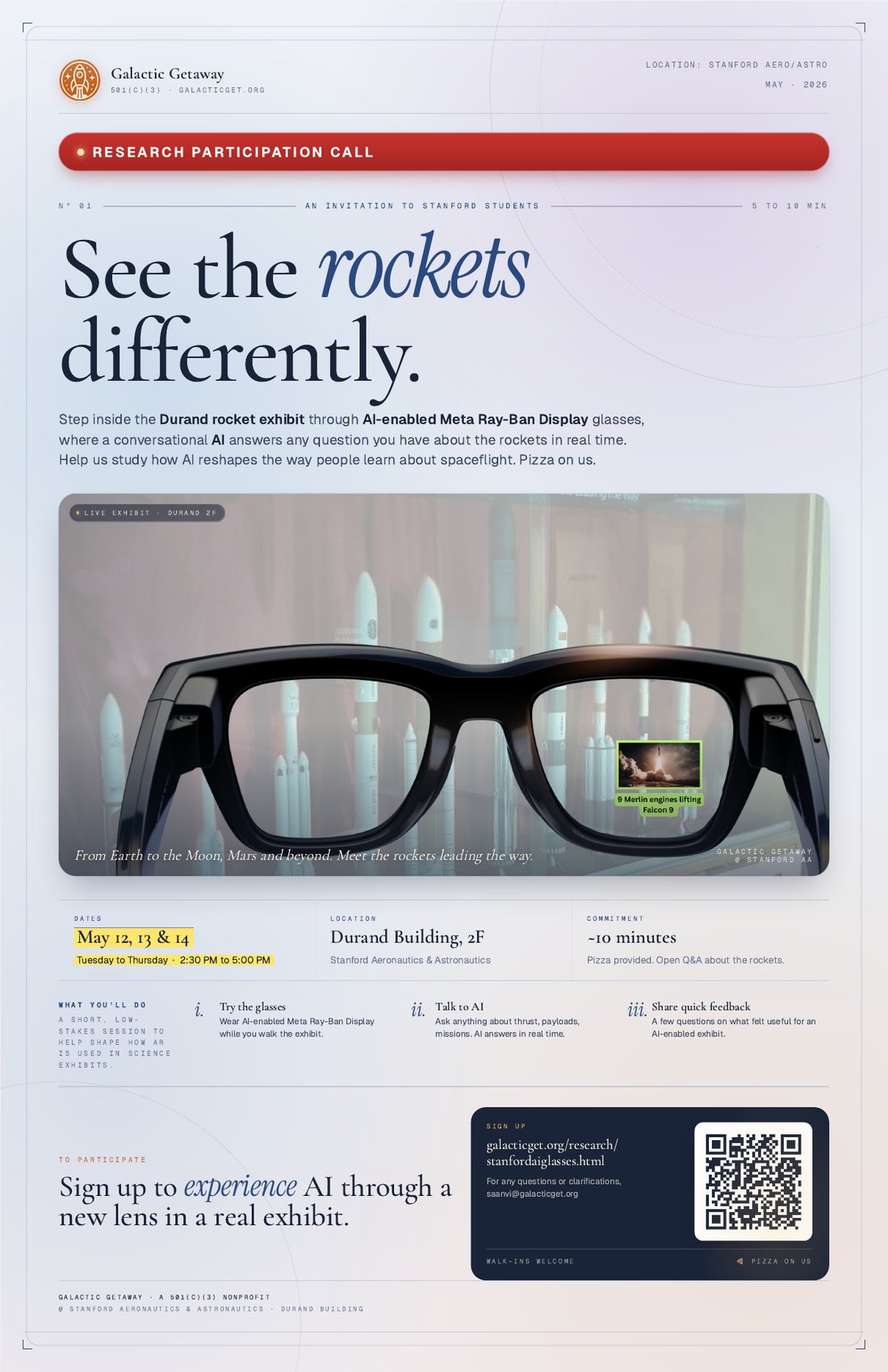
I put this poster up around Stanford Aero/Astro to find volunteers. It asked for about ten minutes on May 12, 13, or 14 and promised pizza. Walk-ins were welcome too.
Study day
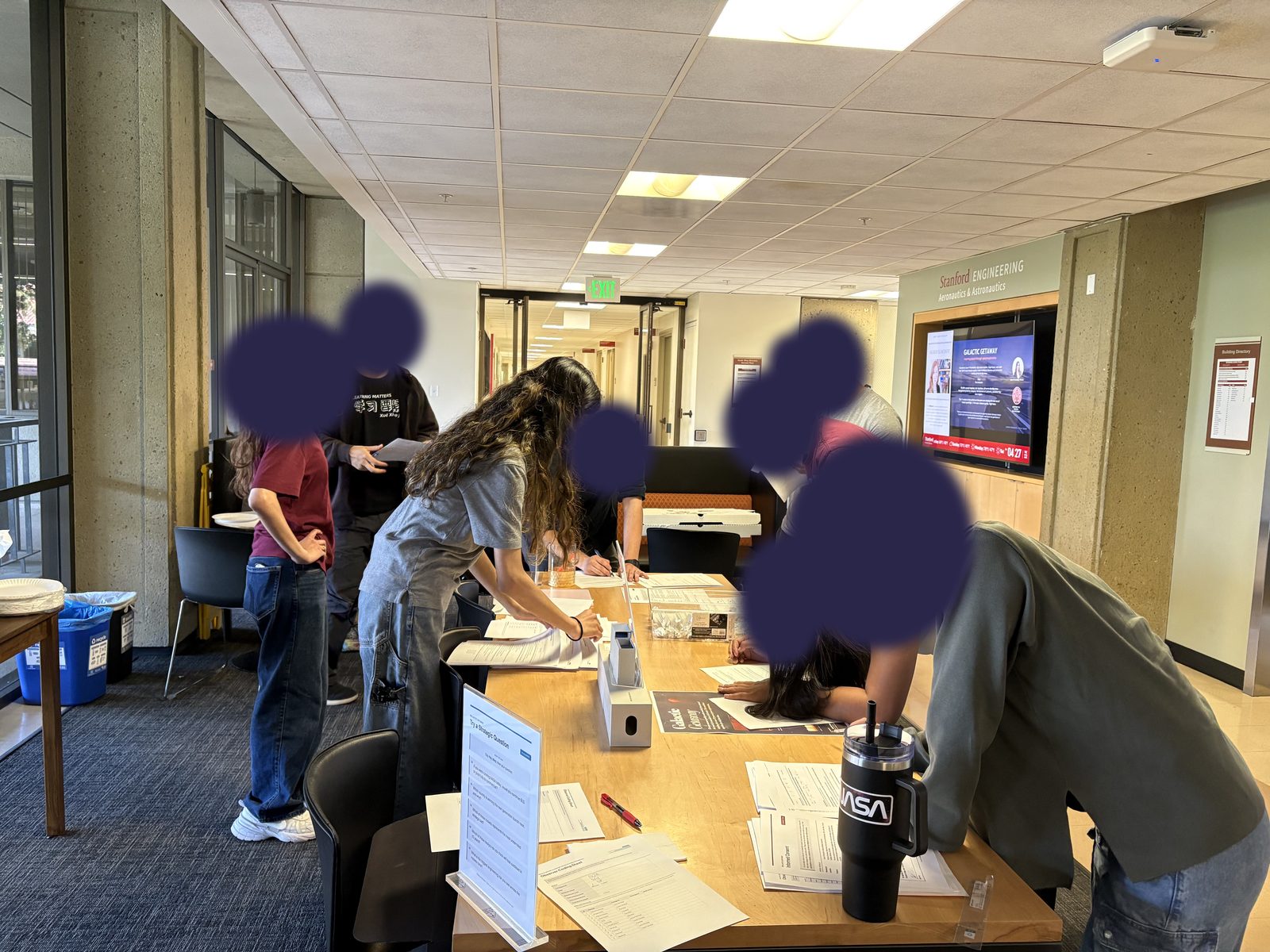
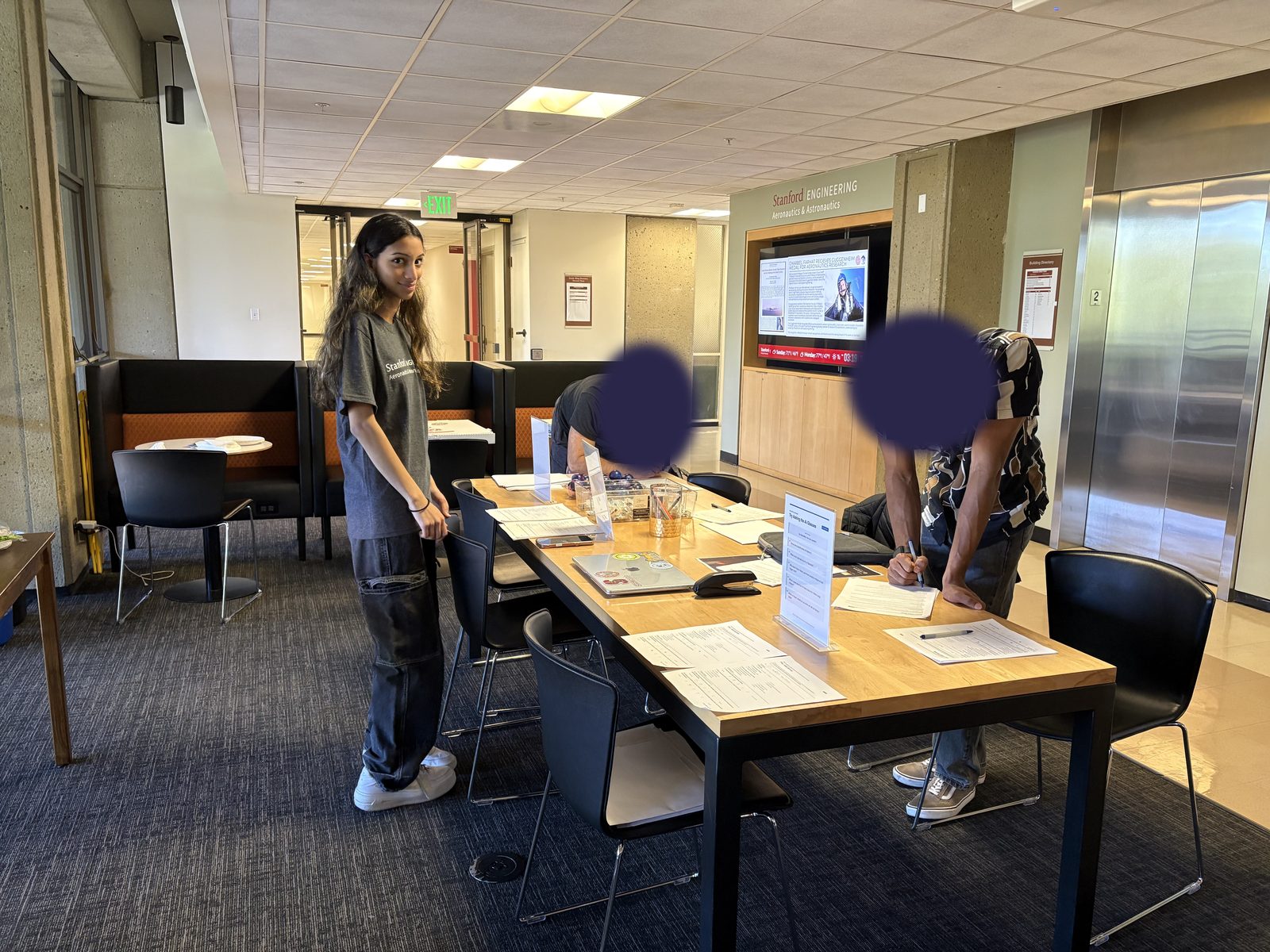
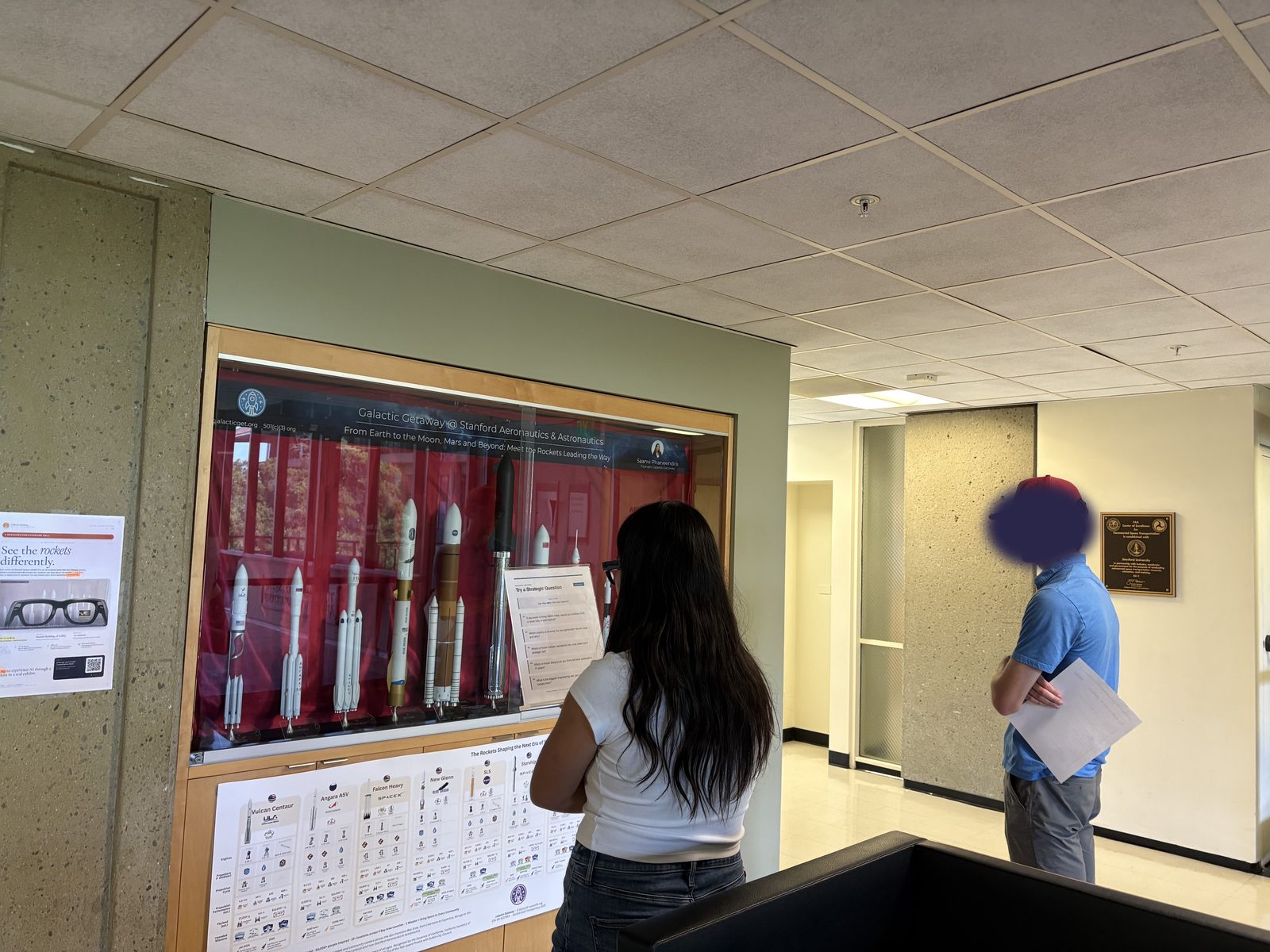
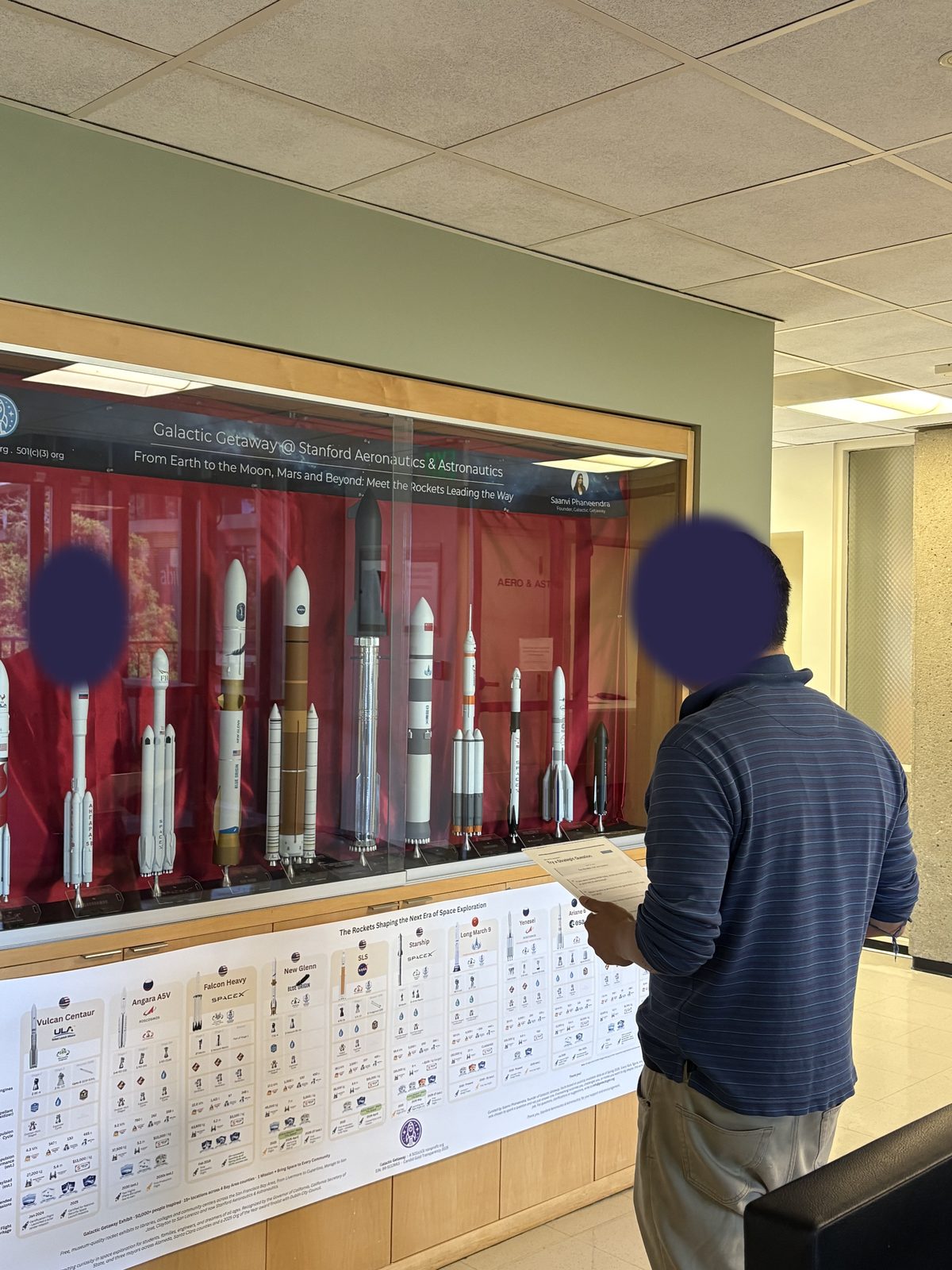
Why are the faces covered? Everyone in these photos except me volunteered for the study, and the consent form promised them it would be anonymous, with no identifying information collected. A photo of someone's face is identifying, so I covered every face except mine.
What I expected
I predicted recall would be the same in both groups, since the poster already had the facts. I thought the glasses would pull attention toward the less famous international rockets and lead to better reasoning on the kinds of questions a poster can't answer.
What I found
The paper is under review, so the numbers stay with the journal for now. What I can say is that one of my four predictions held, one moved in the right direction, one went the other way, and the finding I didn't predict at all turned out to be the most important one.
It changed how I design exhibits. And it made me a lot more skeptical about what "add AI" actually does for a learner.
I'll post the full results, the figures, and the data here once the journal makes its decision.
What I'd do next
- Run it at a public library with families, not a university
- Log the actual questions people asked the glasses and code those, not just the survey answers
- Deliberately vary how good the AI's answers are and see whether that's what moves attention
- Add a follow-up test a few weeks later to see if anything sticks
Want the details early?
If you're a researcher, educator, or exhibit designer and want to read the manuscript before it's public, email saanvi@galacticget.org and tell me what you're working on.