Testing AI Smart Glasses at a Rocket Exhibit
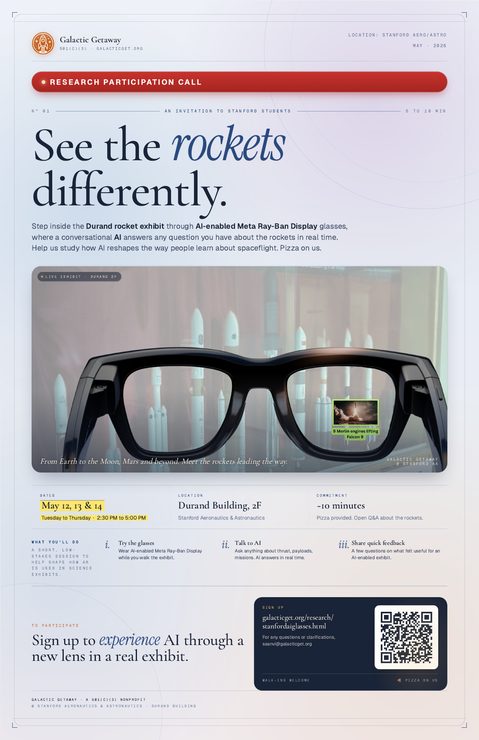
This past May, I turned my Galactic Getaway rocket exhibit in Stanford's Durand Building into a research study. The question was simple: if visitors can talk to an AI about the rockets while they look at them, do they actually learn more?
How the Study Worked
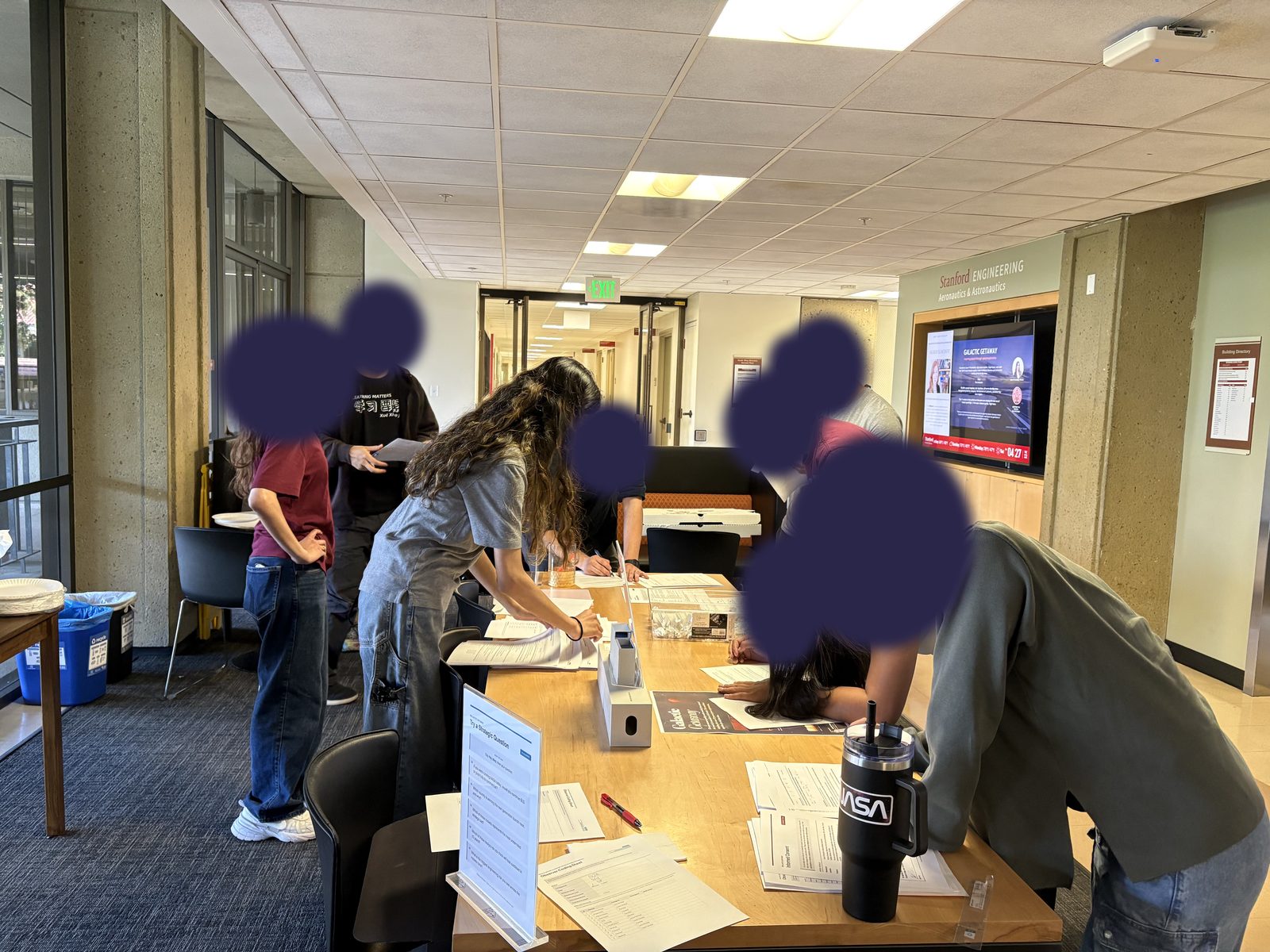
Over three afternoons, Stanford students volunteered to walk through my exhibit of eleven 1:144 scale rockets. Each person was randomly placed in one of two groups. One group used the exhibit and a detailed comparison poster. The other group had the same exhibit plus Meta Ray-Ban Display AI smart glasses that they could ask questions in real time. Everyone took a short survey before and after.
I didn't want to test AI against nothing. Real exhibits already have good posters, so the fair test is whether AI adds anything on top of one.
Where Are the Results?
My paper has been submitted to the Journal of Emerging Investigators (JEI) and is under review, so I can't share the results yet. As soon as the paper is published, I'll post the full results here and on the research page.
What I can say is that the study changed how I think about adding AI to exhibits, and some of what I found surprised me.
Read About the Study
The research page has the full study design, photos from study day, and the poster I used to recruit volunteers.
Thank you to the Stanford Department of Aeronautics and Astronautics for hosting the exhibit, to my mentor Lauren Simitz, and to every volunteer who gave their time.