Hearing Zero at Starbase: My Starship Flight 13 Story
This summer I went back to Starbase for the second time. The first time, the sonic boom from an early Starship test flight sparked something in me that eventually became Galactic Getaway. This time I came to watch Starship Flight 13 launch live from Boca Chica on July 16.
The Countdown
We sat on the rocks along the edge of the island. Right below us, waves were crashing in loud and fast, one after another. About five miles ahead, Starship stood fully stacked on its Super Heavy booster, ready to launch. From where we were, it was just a thin silver figure against the sky, but the excitement around me was huge.
I tracked SpaceX's countdown the whole time. The Texas heat was intense, the kind you feel on your skin through your shirt, but every minute was worth it. The clock got down to about 40 seconds, then held. Then held again. SpaceX often pauses near the end while teams check every system, so we waited with our eyes locked on the pad.
T-0, and Nothing
When they finally let the clock run through the last few seconds, I got ready for the roar that starts the whole journey. Then it came: a deep, massive rumble rolled across the water... and stopped after a second or two. The countdown hit zero. Starship didn't move.
For a moment nobody around me knew what had happened. Then the news came through: SpaceX was standing down for the day.
Why It Scrubbed
As Booster 20's 33 Raptor 3 engines started up, four of them failed to ignite. The booster can tolerate up to three engines out, so the flight computer automatically aborted right at T-0. The roar I heard was the 29 engines that did light, for just an instant, before the system shut everything down to protect the rocket and the pad. Elon Musk later posted that two Raptors would be replaced "to be confident of a good flight."
I'll admit it was a little heartbreaking. But it was also amazing to see how carefully a rocket this big is protected. An abort isn't a failure. It's the system doing exactly what it's supposed to do.
The Morning After
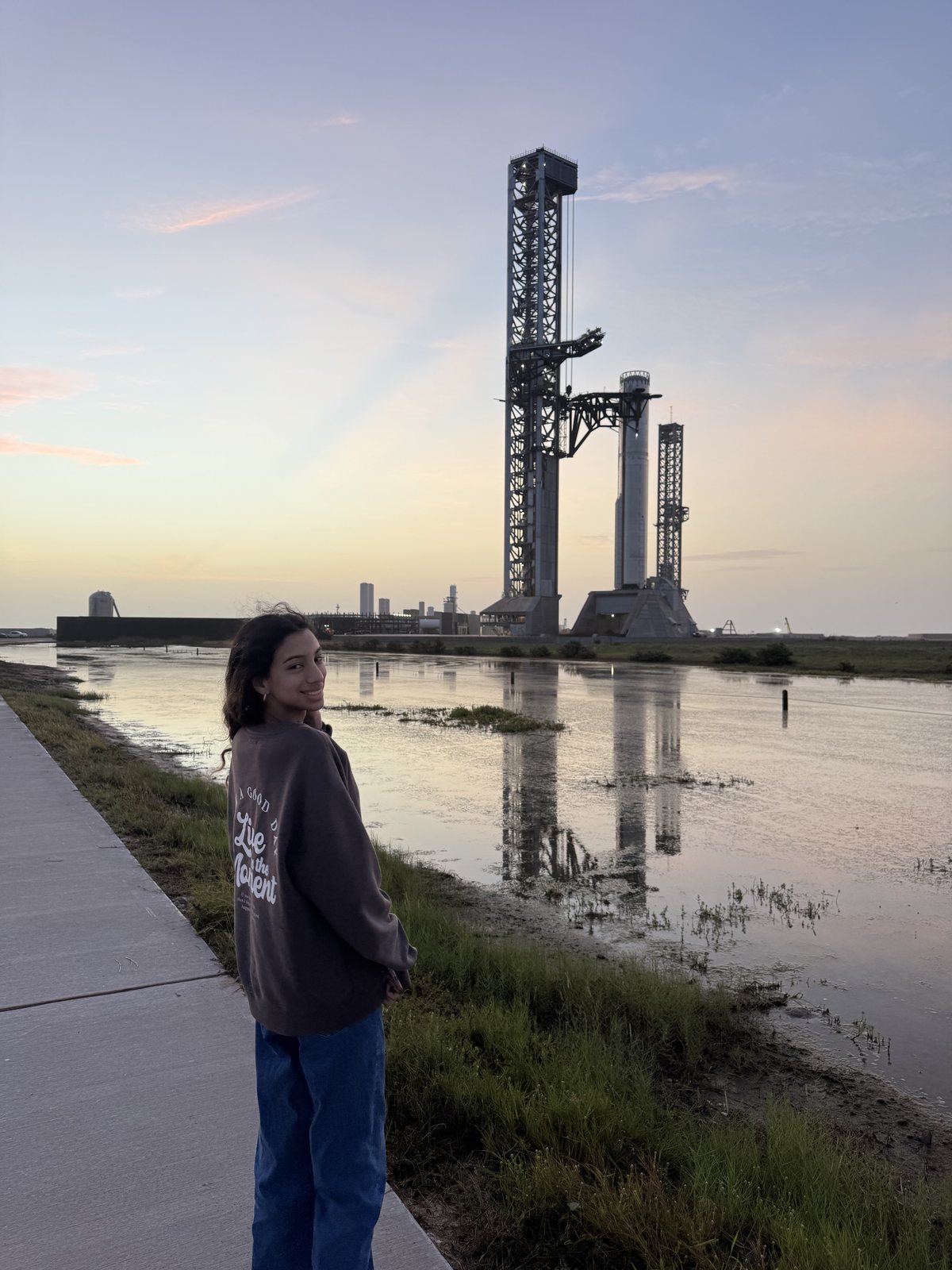
The launch was scrubbed, but the trip definitely wasn't. Early the next morning, crews were already removing Ship 40 from the stack, and we watched as they carefully moved it away for inspection and repairs.
Then I went to see Booster 20, still standing on the launch pad. Up close, it towered over me. I've spent so much time with Starship at 1:144 scale, where the whole stack is under three feet tall. Seeing the real thing, about 407 feet tall when fully stacked, in real size and in real time, is hard to put into words.
Even standing still, the launch tower next to it looked incredibly powerful, with the giant "chopstick" arms SpaceX uses to catch boosters out of the air. The sunrise glowed behind it all, and the water in front reflected the whole scene like a mirror.
What Happened Next
SpaceX swapped the engines and ran another test on Booster 20 on July 22. The next attempt, on July 23, was called off because of weather, and Tropical Storm Bertha pushed it back one more day.
On July 24, Starship Flight 13 finally lifted off, and it made history. It was the first Starship flight to deploy real, working satellites: 20 next-generation Starlink V3 satellites. Six of them even carried cameras to look back at the ship's heat shield in space. Ship 40 relit one of its Raptor engines in space, a key step toward future orbital flights. Then it made what SpaceX called its softest splashdown yet in the Indian Ocean, and it stayed intact even after tipping over. The booster had a rougher ending: not all of its landing engines relit, and it hit the Gulf of Mexico harder than planned.
As SpaceX's Dan Huot put it on the broadcast, it was "lucky number 13."
About Starship and Starbase
Starship is the largest and most powerful rocket ever built. It has two stages: the Super Heavy booster, with 33 Raptor engines, and the Starship upper stage, with six. Both are designed to be fully reusable, which could make reaching space far cheaper. NASA has chosen a version of Starship as the lunar lander for its Artemis missions to return astronauts to the Moon, and SpaceX hopes it will carry people to Mars one day.
Starbase sits at the southern tip of Texas, where the Gulf of Mexico meets the border with Mexico. What started as a small test site is now an official city with its own factories, launch pads, and towers. Standing there, you can feel the future being built on one small stretch of coastline.
Why It Matters to Me
Seeing Starship Flight 13 up close was truly inspiring. It reminded me of what kids tell me when they see our 1:144 scale Starship model at their local library. For them, that little rocket is the start of a big dream. For me, standing in front of the real one felt exactly the same, just 144 times bigger.
Sometimes the countdown hits zero and the rocket stays on the ground. But a dream never really scrubs. It just waits for its next launch window.